
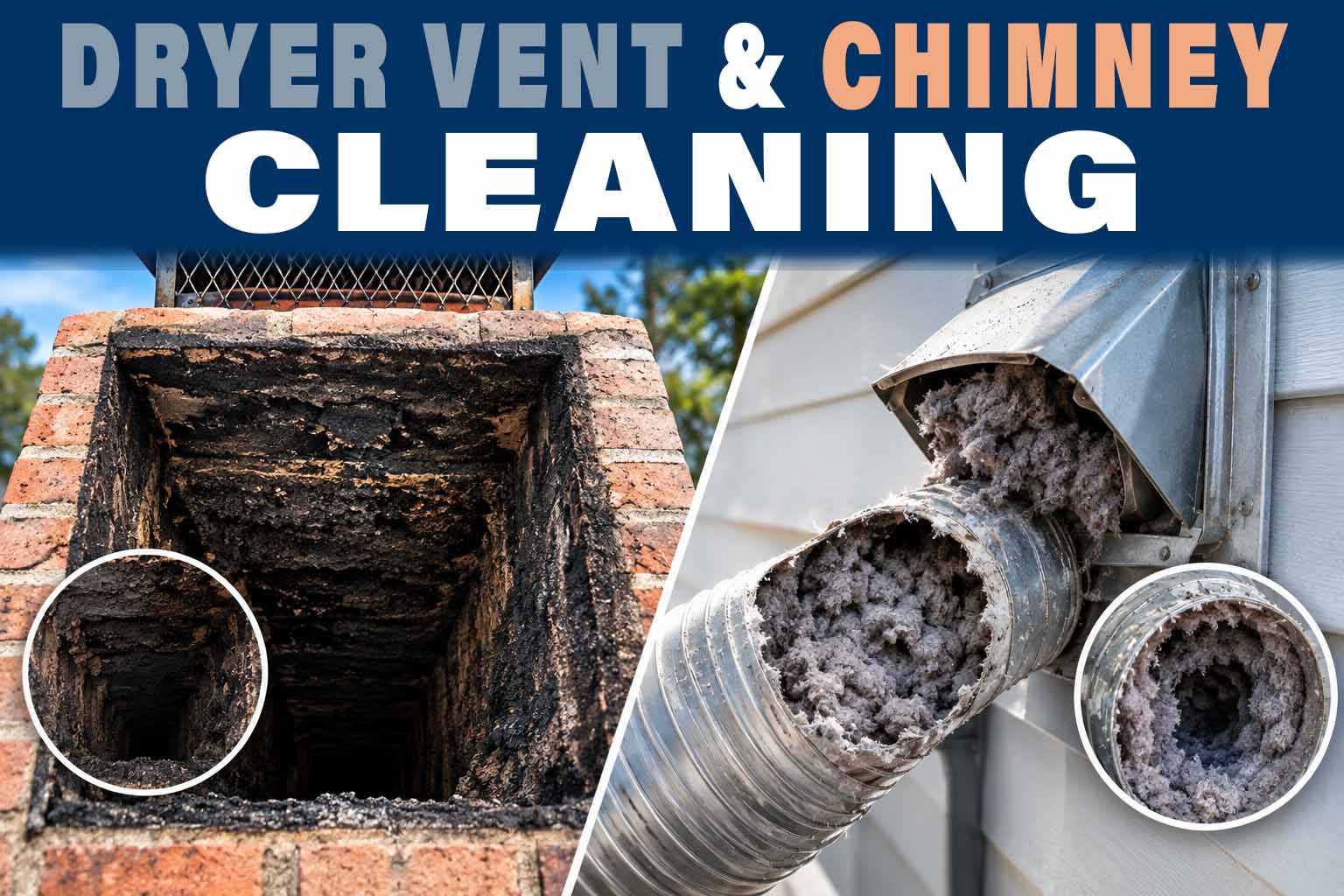

Why Dryer Vent & Chumney Cleaning Is a Fire Safety Must-Do, Not a Maybe
Of all the exterior and home maintenance services we offer, dryer vent cleaning is the one most likely to get skipped — right up until it becomes a real problem. Unlike a dirty gutter or a mossy roof, a clogged dryer vent isn’t something you can see just by walking around your house. But it’s one of the more serious safety issues hiding in plain sight.
How a Clogged Vent Becomes a Fire Risk
Every time you run a load of laundry, lint escapes the trap and travels through the vent pipe. Over time, that lint builds up along the walls of the duct — especially at bends, joints, and anywhere airflow slows down. As the buildup grows:
- Your dryer has to work harder to push air through, so it runs hotter
- Drying times get longer, sometimes noticeably
- The heating element stays on longer per cycle, increasing wear
- Trapped lint sitting next to a hot heating element becomes a genuine fire hazard
Dryer fires caused by lint buildup are a well-documented, common cause of residential house fires — and they’re almost entirely preventable with regular cleaning.
Signs Your Vent Needs Attention
- Clothes take noticeably longer to dry than they used to
- The outside of the dryer feels hot to the touch during a cycle
- You notice a burning or musty smell when the dryer runs
- The exterior vent flap doesn’t open easily or barely moves when the dryer’s running
- It’s been over a year since the vent was professionally cleaned
It’s Not Just the Dryer — Check the Full Run
A lot of homeowners clean the lint trap religiously (which you should) but don’t realize that’s only catching a fraction of what actually escapes into the vent line. The real buildup happens further down the pipe — especially in long runs, runs with multiple bends, or vents that exit through the roof instead of a nearby exterior wall. Those are exactly the sections a lint trap can’t reach and a simple vacuum can’t clear.
Chimneys Have a Similar Problem
If your home has a wood-burning fireplace, creosote buildup in the chimney flue creates a very similar risk — a flammable buildup that accumulates unseen until it’s a real hazard. If it’s been a while since either your dryer vent or your chimney has been professionally inspected and cleaned, it’s worth doing both at the same time.
How Often Should You Have It Cleaned?
For most households, once a year is the standard recommendation — more often if you do frequent laundry loads, have a long or complex vent run, or have noticed any of the warning signs above.
Between Professional Cleanings
If you want to do a basic check yourself, a flexible dryer vent brush kit can clear the first few feet of the line. But for a full top-to-bottom, end-to-end clean of the entire vent run, that’s a job best left to equipment (and experience) most homeowners don’t have on hand.



0 Comments